End-to-End 8-Stage Standardized Production Workflow
Eliminate opaque manufacturing timelines with BIUBIU TOY. Our dedicated project manager accountability system provides industrial buyers with transparent stage gates, documented process quality control, and verifiable lead-time milestones from CAD pattern engineering to containerized ocean freight for OEM custom plush toys.
Design Assessment and Pattern Deconstruction
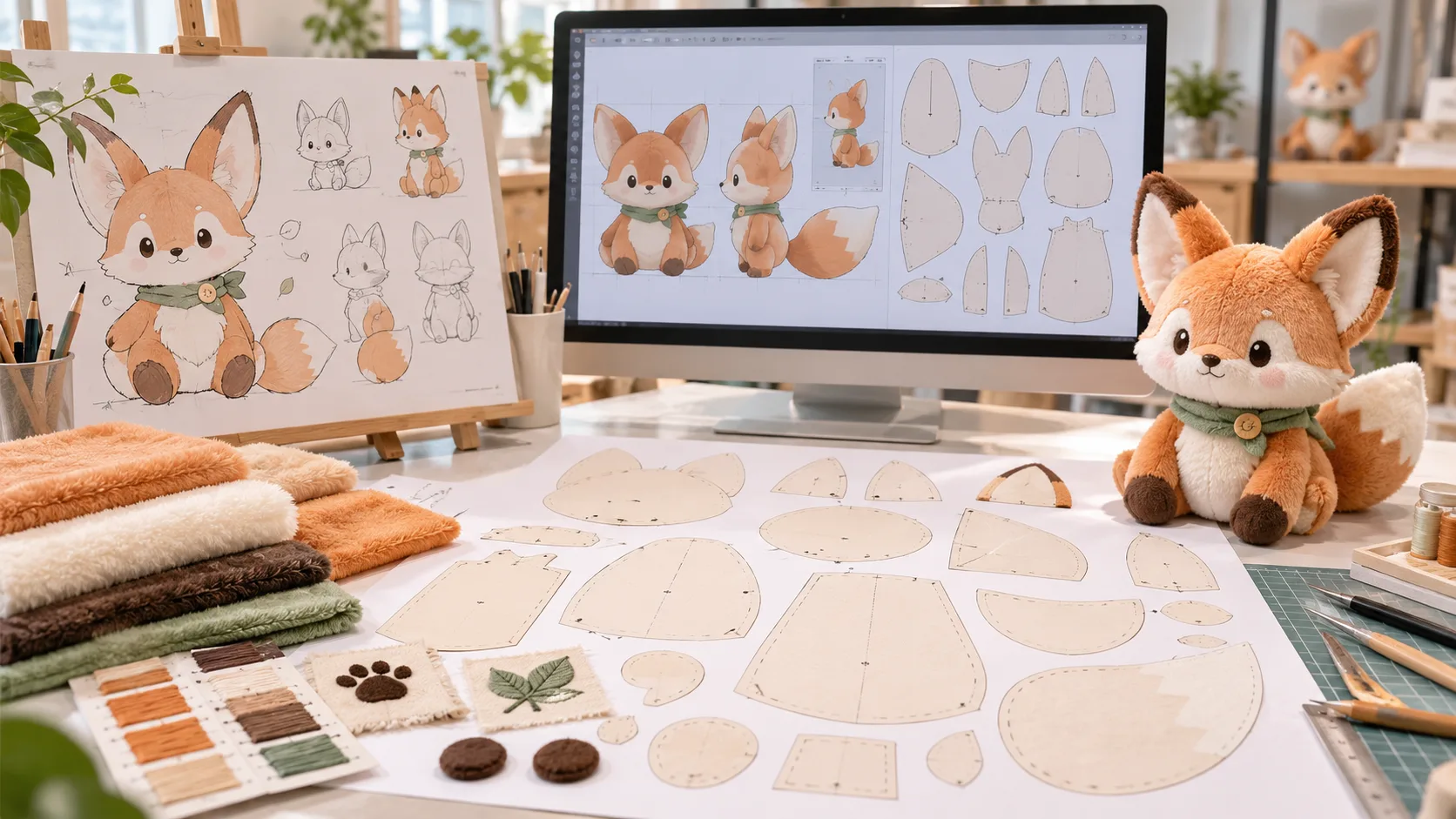
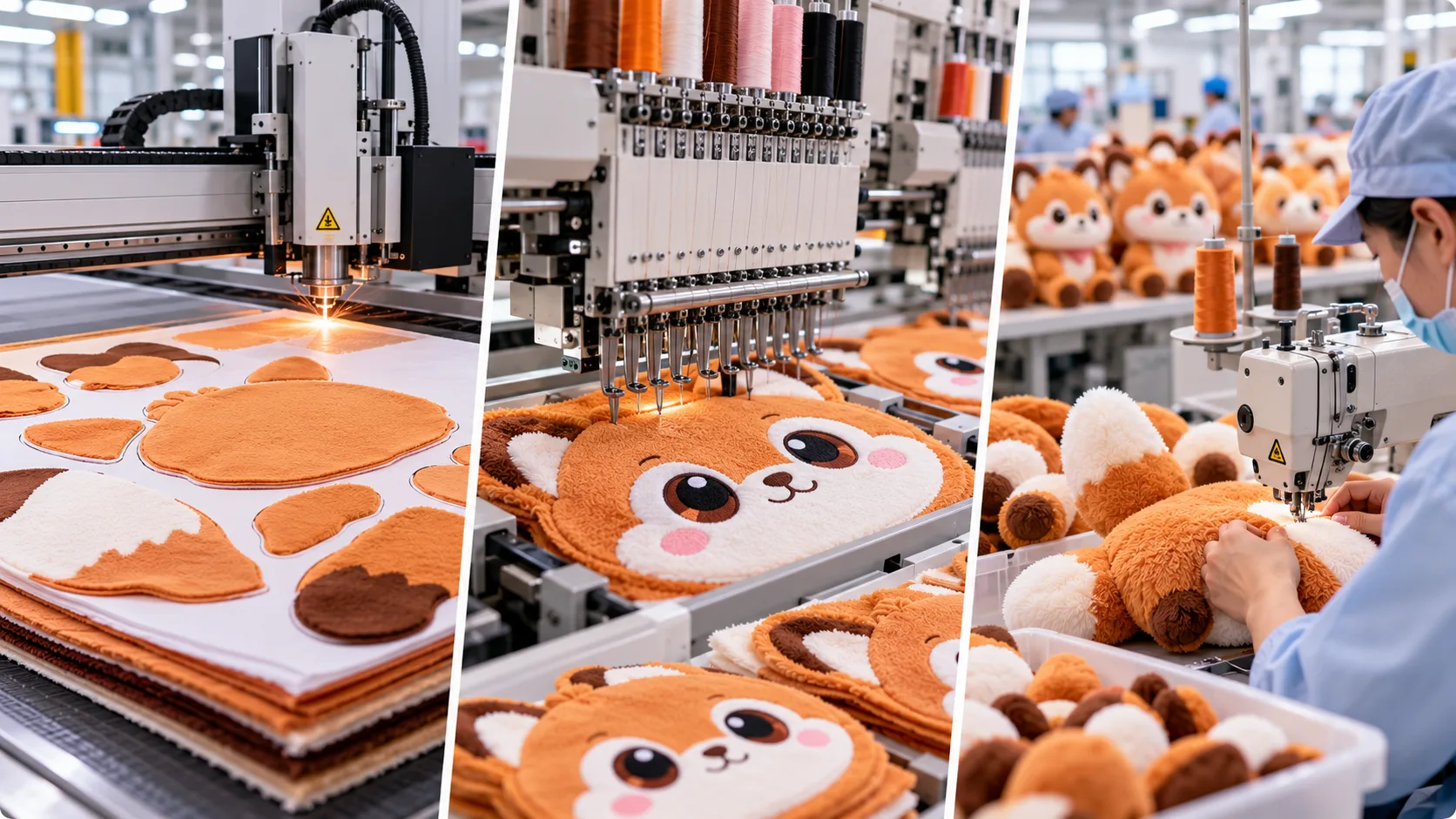
Industrial pattern engineers convert 2D character turnarounds or 3D CAD files into production-ready nested panels for specialized custom character plush lines. Our technical team evaluates pile grain direction, programs computerized embroidery density, and runs yield simulations to minimize fabric scrap.
Project Manager Gate Deliverable: Comprehensive DFM technical report, vectorized cut-panel layout, and master fabric consumption schedule.



Incoming Material Inspection IQC and Golden Sample Protocols
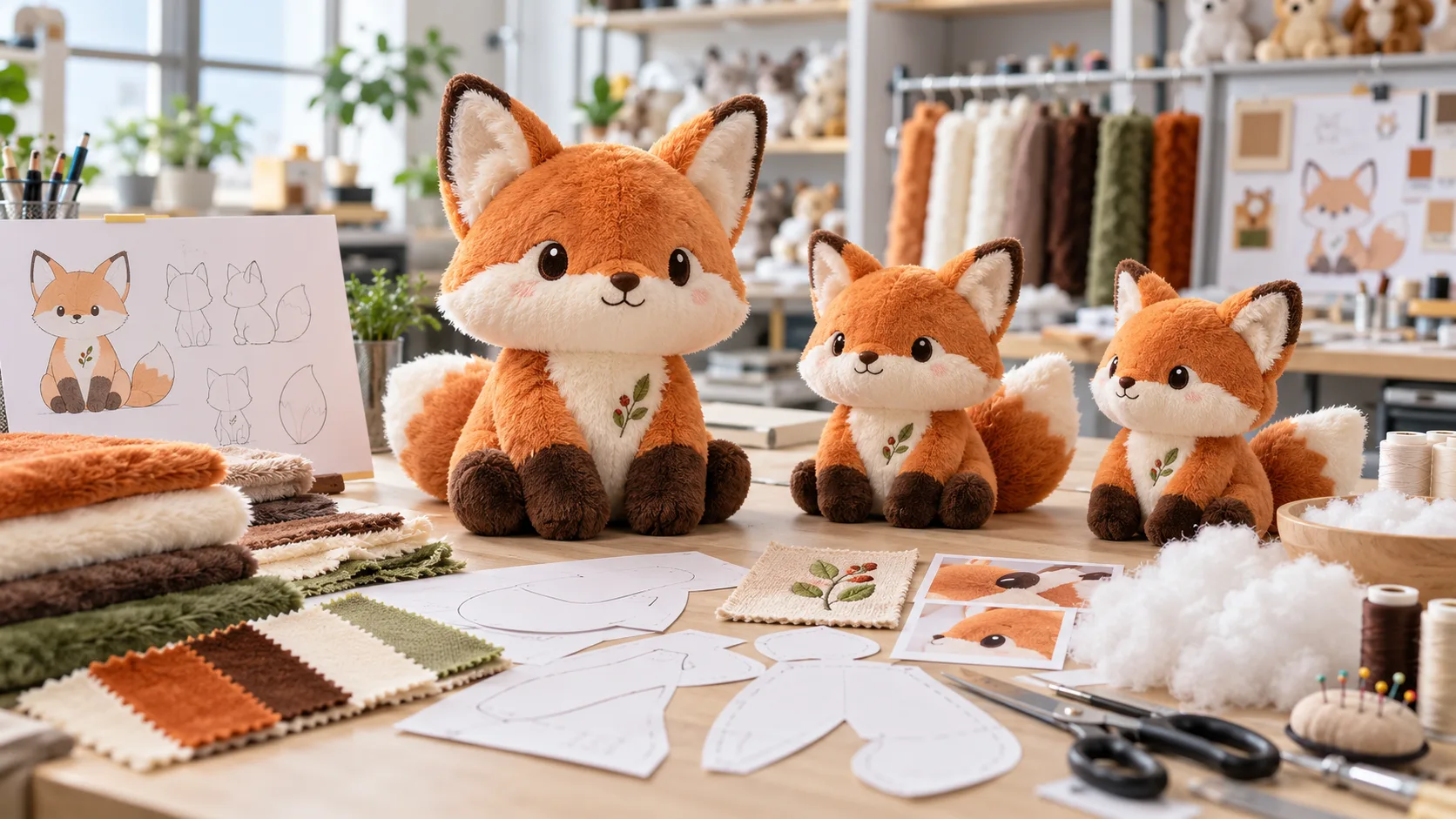
Eliminating bulk manufacturing defects begins the moment raw materials arrive at our receiving docks. Our documented incoming quality control (IQC) protocol and disciplined pre-production sample approval process stop structural weaknesses, dye lot variance, fiber shrinkage, and chemical odors before cutting begins. Every fabric bolt, embroidery thread spool, and batting bale must clear exhaustive laboratory checks to safeguard production continuity.
BIUBIU TOY subjects every partner textile mill and hardware supplier to rigorous incoming material inspection and compliance audits. By pairing standardized spectral color analysis under calibrated illuminants with destructive seam pull testing, our quality assurance engineers uphold uncompromising lot-to-lot consistency, preventing bulk cutting until formal golden sample sign-off is completed across all custom plush toys.
Raw Material Intake Inspection (IQC)
Fabric and Trim Colorfastness Verification
Grade 4+ ColorfastnessIncoming fabric rolls undergo spectral color evaluation inside standardized D65 daylight viewing booths to eliminate metamerism under retail lighting. Our technicians perform wet and dry crocking tests alongside commercial wash-cycle stress testing, ensuring textiles achieve Grade 4.0 colorfastness without bleeding, crocking, or cross-dye migration.
Seam Tensile and Tear Resistance Assessment
≥70N Mechanical PullPlush velour, woven linings, and reinforcement backing undergo calibrated mechanical tensile testing. Seam joins and base textiles must withstand sustained pull loads exceeding 70 Newtons without yarn slippage, run runs, or backing tears, verifying complete compliance with ASTM F963 and EN71-1 physical safety standards on every batch of custom stuffed animals.
Fiber Filling Purity and Flammability Compliance
100% Virgin PP CottonEach incoming batch of high-elasticity polyester staple fiber is checked for cleanliness, chemical purity, and resilience. We verify stuffing is 100% virgin polypropylene down, odorless, free of optical brightening agents (OBA), and fully compliant with international flammability safety thresholds without chemical off-gassing.
Zero-Tolerance Non-Conformance Quarantine
Any raw shipment failing shade tolerance, tensile thresholds, or chemical hygiene is tagged with high-visibility non-conformance placards and routed to a segregated quarantine holding bay. Automated supplier corrective action notices are logged within two hours, barring rejected inventory from entering automated cutting cells.
Golden Sample Sign-Off and Archival
Production bench marker verification protocol
-
360-Degree Photometric & Video Audit
Prior to sample courier dispatch, prototypes undergo comprehensive visual capture inside a 5500K color-calibrated light studio. High-frame-rate video records tactile plush pile recovery, seam line symmetry, eye retention, and volume resilience under multi-axis compression.
-
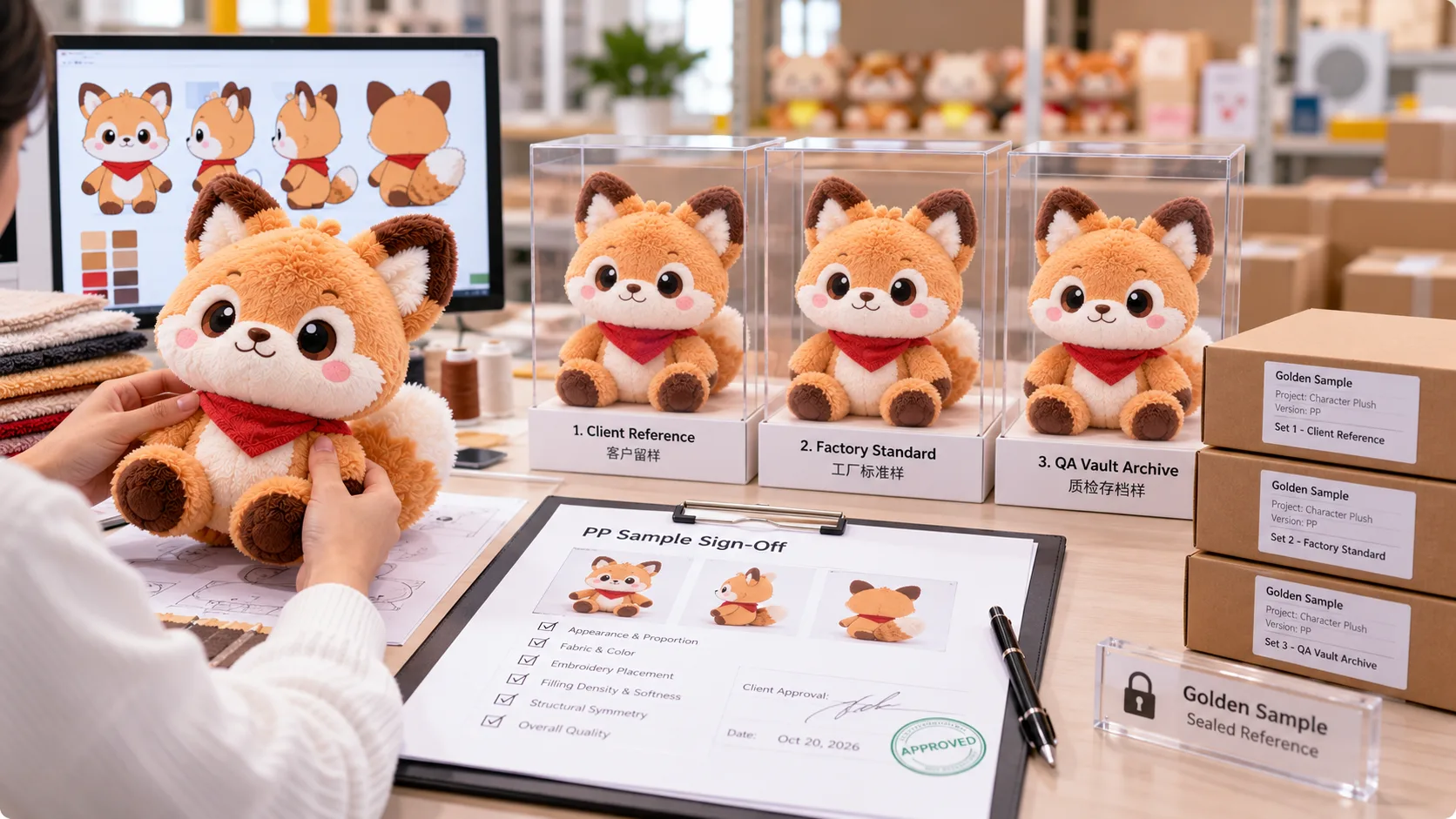
Tripartite Formal Counter-Sample Sign-Off
Three matched golden samples are formally registered upon buyer written sign-off: one buyer reference copy, one hermetically sealed QA master archive, and one workshop floor standard used by patrol inspectors for in-line dimensional audits.
-
Strict Zero-Cutting Policy Enforcement
No automated die or CNC laser cutting program is loaded without signed sample authorization records. This strict hold ensures bulk production runs mirror verified client prototypes with exact structural and aesthetic fidelity across all custom character plush manufacturing orders.

BIUBIU TOY Quality Laboratory Standard
All strategic raw material mills undergo mandatory on-site audits every six months, maintaining certified eco-friendly, non-toxic procurement standards across our global toy production lines.
Comprehensive Intake Testing Matrix
Standardized physical and analytical thresholds applied during incoming material inspection and fabric safety checks.
| Testing Category | Inspection Parameter | Evaluation Standard | Acceptance Threshold | Sampling Frequency |
|---|---|---|---|---|
| Color Stability | D65 Light Cabinet Matching | AATCC EP1 / ISO 105-A02 | Grade 4.0 or Above | 100% of Fabric Dye Lots |
| Physical Seam Strength | Tensile Pull Testing Rig | ASTM F963 / EN71-1 | ≥ 70 Newtons (15.7 lbf) | 5 Swatches per 1,000 Yards |
| Chemical Hygiene | Optical Brightening Agents (OBA) | UV Fluorometric Scan 365nm | Zero Fluorescence Spike | 1 Sample per Bale Lot |
| Flammability Behavior | Surface Flammability Chamber | 16 CFR 1500.44 / EN71-2 | Burn Rate < 0.1 in/sec | Each Raw Trim Shipment |
| Filling Resilience | Compression Deflection Load | ASTM D3574 Standard | ≥ 95% Rebound Recovery | Every Inbound Trailer |
In-Process Plush Quality Control & Workshop Assembly Benchmarks
Mass-market toy manufacturing requires preventative engineering at the sewing machine, not retrospective sorting at the loading dock. At BIUBIU TOY, our in-process quality control framework for custom plush toys monitors every manufacturing cell across eight specialized work centers. Through continuous station calibration, structured two-hour roving patrols, seam strength testing, and non-negotiable physical red-bin quarantine protocols, we ensure bulk production lots match the dimensional precision, tensile strength, and tactile quality of your approved golden counter-sample.
Precision Cutting & Embroidery Inspection
Component-level precision determines final pattern geometry. We govern multi-layer ply shifting through automated nesting software, optical edge tracking, and synchronized multi-head embroidery monitoring.
- ✓ CNC Laser & Die Cutting: Perimeter cut tolerances held within ±1mm with zero heat scorch, fraying, or pile compression.
- ✓ Embroidery Precision Check: Automated stitch counters cross-check digitized DST design files to stop thread fray and tension looping.
- ✓ Backing Mesh Stability: Non-woven stabilizers trimmed flush with zero exposed interlining or structural puckering across high-density artwork.
First-piece sign-off with 60-minute edge & stitch audits
Seam Strength Testing & Structural Joinery
Seam integrity represents the frontline mechanical safeguard preventing child access to internal fillings. Destructive tensile tests confirm cross-seam resilience across high-stress junctions during the production of custom stuffed animals.
- ✓ Line-Side Tensile Pull Tests: Calibrated digital push-pull gauges apply constant mechanical tension under ASTM F963 criteria.
- ✓ Reinforced Anchor Stitching: Limbs, ears, muzzles, and webbing loops receive mandatory automated double-backstitch locking passes.
- ✓ EN 71-1 Mechanical Compliance: Structural perimeter seams withstand ≥70N constant pull force without thread slippage or open voids.
Calibrated clamp testing executed every 2 operating hours
Filling Consistency & Bilateral Symmetry
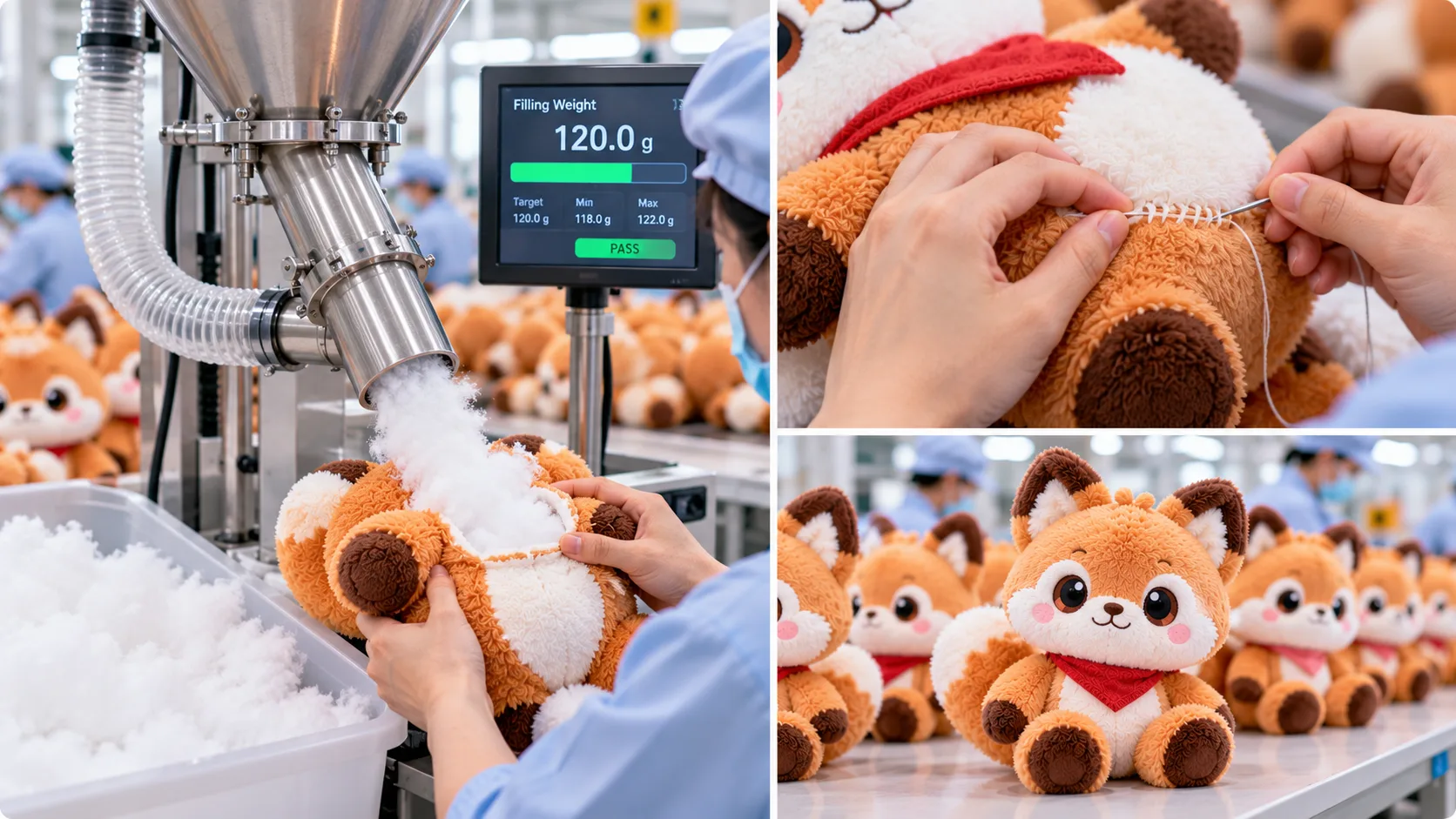
Brand character identity depends on reliable physical ergonomics and facial balance when fabricating custom character plush. Pneumatic load-cell injection prevents localized lumpiness while optical laser fixtures guide component alignment.
- ✓ Gravimetric Injection Control: Metered pneumatic blowers regulate PP fiber charge, capping individual unit weight variance within ±3%.
- ✓ Laser Crosshair Fixtures: Optical dual-axis guides verify horizontal eye leveling, snout centrality, and bilateral ear placement.
- ✓ Resilience & Memory Testing: Virgin 7D/15D conjugated hollow fiber batting inspected for recovery performance after compression.
Continuous benchtop tare weighing with 100% optical alignment
Physical Red-Bin Isolation & 8D Non-Conformance Escalation
Whenever a roving inspector identifies broken stitch counts, asymmetrical facial placements, or filling discrepancies, the operational cell halts immediately. Non-conforming pieces transfer into locked red quarantine containers positioned alongside the line, ensuring zero accidental re-entry into the production stream.
Every assembly line at BIUBIU TOY is directly supervised by senior IPQC inspectors with over eight years of hands-on industrial plush experience. Any recurring failure pattern initiates an immediate 8D root-cause investigation, computerized equipment recalibration, and complete retroactive inspection of preceding lots to protect delivery timelines and quality commitments.
Assembly Floor Quality Control Metrics
| Craftsmanship Station | Control Metric | Permitted Tolerance | Corrective Action Mechanism |
|---|---|---|---|
| Pattern Die & Laser Cutting | Edge cleanliness and perimeter scaling | ±1.0mm dimensional allowance | Bed recalibration; scrap of scorched or overcut panels |
| High-Density Embroidery | Thread tension and stitch completion | Zero skipped or loose stitches | Needle replacement; panel flagged for manual unpicking |
| Main Shell Seaming | Mechanical pull resistance | ≥70N tensile force threshold | Immediate tension adjustment; 100% station retro-check |
| Pneumatic Cotton Stuffing | Individual unit tare weight | ±3% target grammage range | Digital scale zeroing; manual fiber balance adjustment |
| Facial Feature Setting | Bilateral eye/nose offset alignment | ≤1.5mm bilateral variance | Laser jig realignment; red-bin quarantine of misaligned units |
Finished Product Acceptance: AQL 2.5 Plush Inspection Standard, FQC Protocols, and ISTA Drop Testing
Every custom manufacturing run culminates in systematic Final Quality Control (FQC) and Outgoing Quality Control (OQC) to verify complete alignment with your approved pre-production golden samples. BIUBIU TOY implements rigorous plush final quality check procedures across all custom plush toys, combining international statistical sampling thresholds with ISTA drop test protocols before any export container leaves our loading docks.
AQL 2.5 / 4.0 Sampling Thresholds and Defect Classification Matrix
Conforming strictly to ANSI/ASQ Z1.4 and ISO 2859-1 standards, our end-of-line inspectors apply the globally recognized AQL 2.5 plush inspection standard across all master cartons to isolate, document, and eliminate non-conforming items prior to export sign-off.
| Defect Classification | Acceptance Criteria | Observable Failure Conditions | Mandatory Corrective Action |
|---|---|---|---|
| Critical Defects | Zero Tolerance (AQL 0.0) | Broken needle fragments, exposed metal burrs, detached hard-plastic eyes or noses, sharp points, chemical odor, or biological contamination. | Immediate lot quarantine, complete production line halt, and mandatory 100% station-by-station re-inspection. |
| Major Defects | AQL 2.5 Acceptance Limit | Structural seam separation below 70N, visible facial asymmetry exceeding 1.5mm, missing sewn-in care tags, Pantone embroidery deviations, or irregular stuffing distribution. | Quarantine entire production sub-lot for repair, seam re-stitching, corrective re-inspection, and full secondary sampling. |
| Minor Defects | AQL 4.0 Acceptance Limit | Superficial surface lint, untrimmed sewing thread ends exceeding 2mm, minor polybag creasing, or removable particulate dust on fur pile. | Secondary manual cleaning pass, thread-trimming station cycle, and retail polybag replacement prior to pack-out. |
Traceable Outgoing Quality Control (OQC) Reporting
BIUBIU TOY generates an exhaustive Outgoing Quality Control (OQC) compliance pack with every shipment. Procurement teams receive validated documentation including high-resolution carton mark photographs, individual gross weight registers, GS1 barcode grading reports, seam pull-gauge force logs, and dual-pass needle detection operator sign-offs before container release.
- Critical dimensional variance logs (<±2%)
- ANSI/ISO Grade-A barcode scan certification
- Individual unit electronic scale weight logs
- Carton equilibrium moisture testing (<12% RH)

Packaging Integrity and Transit Stress Simulation
Transit durability is just as essential as seam tensile strength. We subject fully packed master cartons to simulated rough handling, multi-tier pallet compression, and ocean freight humidity profiles to prevent retail display damage during transpacific and transatlantic distribution of our bulk custom stuffed animals.
ISTA 1A Drop Test Procedure
Randomly selected master cartons undergo a certified 10-cycle freefall sequence (1 corner, 3 edges, 6 flat faces) from calibrated drop heights of 30 to 42 inches calibrated to total package gross mass.
5-Ply Double-Wall Export Master Cartons
Constructed from reinforced 200 lb/in² burst-rated corrugated cardboard (BC-flute) with moisture-resistant outer facing, designed to resist pallet stack crushing and damp marine container holds.
Moisture-Barrier Polybags & Desiccants
Individual plush toys are sealed in virgin low-density polyethylene polybags containing non-toxic silica gel canisters, maintaining relative package humidity under 10% through tropical transport routes.
Third-Party Inspection Support
Full Laboratory AccessBIUBIU TOY provides fully equipped, climate-controlled testing suites for independent inspection auditors. We accommodate designated testing engineers, provide calibrated mechanical tension fixtures and D65 light booths, and support unhindered sampling from any finished pallet.
Audit-Ready Manufacturing Standards for Global OEM & Licensing Brands
Our structured final quality control framework helps protect your brand and reduce delivery risks. Before shipment, BIUBIU TOY evaluates bulk plush products against approved golden samples, covering textile hand-feel, facial symmetry, seam durability, and retail packaging integrity.
Plush Manufacturing Lead Times & Quality Control FAQ
Find clear answers regarding pre-production sample approvals, in-process seam pull testing, metal detection safety protocols, and third-party lab inspection procedures. BIUBIU TOY helps brand owners, retail buyers, and licensing partners navigate the production of custom plush toys and resolve complex OEM QA challenges with total operational clarity.
AQL 2.5 / 4.0 Standard
Every production lot is audited under ANSI/ASQ Z1.4 sampling plans. Zero tolerance for critical mechanical defects ensures that export consignments meet strict ASTM F963 and EN71 safety requirements.
Dual-Pass Metal Detection
Every finished item passes through two independent conveyor needle detectors calibrated to detect ferrous spheres down to Fe 0.8mm, eliminating broken needle hazards before carton sealing.
IP & Design Protection
We enforce strict non-disclosure agreements, store vector artwork and embroidery stitch cards on isolated internal servers, and maintain secure containment vaults for proprietary character molds.
BIUBIU TOY implements a transparent revision protocol before scheduling production rollouts. When evaluating initial physical prototypes, any deviations in facial symmetry, pile pile direction, embroidery line thickness, or hand-feel stiffness are resolved through structured pattern alterations. Our technical patternmakers prepare an adjustment action plan detailing pattern revisions, fiber fill volume adjustments, and thread tension corrections.
Prototyping iterations include complimentary pattern modifications and an engineering adjustment proposal prior to formal golden sample sign-off and bulk material sourcing. Revised prototypes feature high-resolution 360-degree photography and tactile comparison notes. Bulk material cutting remains paused until the client signs off on three identical golden counter-samples: one retained by the client, one assigned to the factory line patrol station, and one cataloged in our QA archive.
If an in-process quality control (IPQC) patrol or final quality control (FQC) inspection detects defect rates above our threshold, production on that work cell is halted immediately. Suspect work-in-progress units are removed to locked red-bin quarantine areas to prevent accidental blending with compliant goods. Our quality engineering team traces the root cause back to specific cutting dies, sewing operators, embroidery machines, or stuffing nozzles.
Quarantined lots are traced upstream through production stations for 100% rework and reinspection, accompanied by an official 8D corrective action report before release. This report details immediate containment, root-cause analysis, and preventative operating countermeasures. After reworking, the batch must clear a fresh AQL inspection, undergo seam strength re-testing exceeding 70 Newtons, and pass dual metal detection before packaging.
| Defect Classification | Acceptance Standard | Containment & Corrective Action |
|---|---|---|
| Critical (Broken needle fragments, exposed sharp edges, detached small parts) | AQL 0.0 (Zero Defect Acceptance) | Immediate batch lock, needle log audit, 100% product deconstruction and recalibration |
| Major (Open seam slippage, facial misalignment >1.5mm, missing legal warning labels) | AQL 2.5 Normal Inspection | 100% lot containment, line operator retraining, dedicated supervisor re-inspection |
| Minor (Loose thread ends >3mm, light surface lint, minor barcode label skew) | AQL 4.0 Standard Limit | End-of-line thread trimming, pneumatic lint brushing, barcode label re-application |
Yes. We routinely host brand quality teams and independent inspection agencies, including SGS, Bureau Veritas, Intertek, and TÜV SÜD. We maintain an open-door policy across every operational phase, supporting both social compliance audits (BSCI, Sedex SMETA) and pre-shipment inspections (PSI) for global consumer goods distributors.
We support customer inspections by providing dedicated inspection rooms, calibrated testing equipment, and complete technical support on-site. Visiting inspectors receive access to incoming raw material test certificates, lot-by-lot IQC records, metal detector sensor verification sheets, and golden counter-samples. Our QA engineers provide direct on-site support for ISTA 1A master carton drop tests, torque/tension tests, and seam tear assessments.
- Dedicated Inspection Facilities: Temperature-controlled inspection suites equipped with standardized D65/TL84 light booths.
- Calibrated Test Instrumentation: Calibrated digital force gauges, torque fixtures, small parts cylinders, and dual needle detection tunnels.
- Instant Documentation Access: Immediate retrieval of hourly IPQC patrol sheets, raw material COAs, and equipment calibration certificates.
Production timelines for custom stuffed animals vary depending on plush pattern complexity, custom Pantone-matched velboa fabric dyeing, embroidery detail, integrated electronic sound chips, and total batch size. Prototyping takes 5 to 7 business days, while mass bulk production spans 25 to 35 business days following golden sample sign-off, based on volume and complexity.
When projects require custom-dyed high-pile plush, jacquard knit details, or special jacquard fabrics, yarn dyeing and laboratory dip approvals typically require an additional 7 to 10 working days. Our standard manufacturing schedule is structured across five core phases:
- Phase 1 (Days 1–5): CAD deconstruction, pattern grading, embroidery digitizing, and assembly of initial physical counter-samples.
- Phase 2 (Days 6–10): Express international courier delivery, client review iterations, and formal three-way golden sample sign-off.
- Phase 3 (Days 11–22): Fabric intake, IQC inspection clearance, precision CNC laser cutting, and computerized multi-head embroidery.
- Phase 4 (Days 23–32): Sub-assembly stitching, regulated fiber fill stuffing, hand-stitch closure, and dual-direction conveyor metal detection.
- Phase 5 (Days 33–35): Final AQL 2.5 random sampling inspection, silica gel insertion, double-wall master carton packing, and pallet shrink-wrapping.
BIUBIU TOY protects original artwork, licensed properties, and proprietary custom character plush schematics through rigorous digital and contractual safeguards. We execute binding non-disclosure agreements, isolate design files on encrypted internal servers, and prohibit unauthorized sample display or factory floor photography.
Our manufacturing ERP system links custom woven labels, printed hangtags, and molded trim components strictly to authorized work orders. Scrap cuttings, excess trims, and defect components are recorded and destroyed under supervisory witness to prevent secondary market leakage or counterfeit product diversion.
Build Your Next Plush Collection with Confidence.
From the first design review to final shipment planning, BIUBIU TOY helps brands turn creative concepts into production-ready custom plush toys—with clear engineering discussions, prototype reviews, and quality checkpoints.
START A PROJECT
Request an OEM / ODM Quote
Tell us about your design and sourcing requirements. We can discuss a suitable development and quality review approach for your project.