Where to Get Custom Plushies Made
Finding the right production partner depends entirely on your project scope, target volume, and budget. When looking to get custom plushies made, you generally have three distinct routes to consider.
Independent Plush Makers for One-Off Commissions
Independent crafters work best when you need a single, highly specialized art piece.
Volume: 1 piece.
Process: Hand-cut patterns, manual stitching, and personal sourcing.
Pros: Highly customized, individual attention to unique details.
Cons: High cost per unit, long wait times, and limited access to industrial techniques like custom fabric dyeing or dense computerized embroidery.
Custom Plush Platforms and Ordering Services
Consumer-facing platforms and print-on-demand websites offer quick ordering portals for simple projects.
Volume: 1 to 10 pieces.
Process: Standardized base templates with basic printing or surface modification.
Pros: Simple ordering interface with low technical friction.
Cons: Rigid body shapes, limited custom fabric choices, and middleman markups that make scaling up expensive.
Custom Plush Toy Manufacturers for Batch Runs
Factory-direct OEM/ODM manufacturers like Biubiu Toy are built for creators, indie brands, and companies seeking professional quality at scalable prices.
Volume: Small-batch runs starting at low MOQs up to commercial retail quantities.
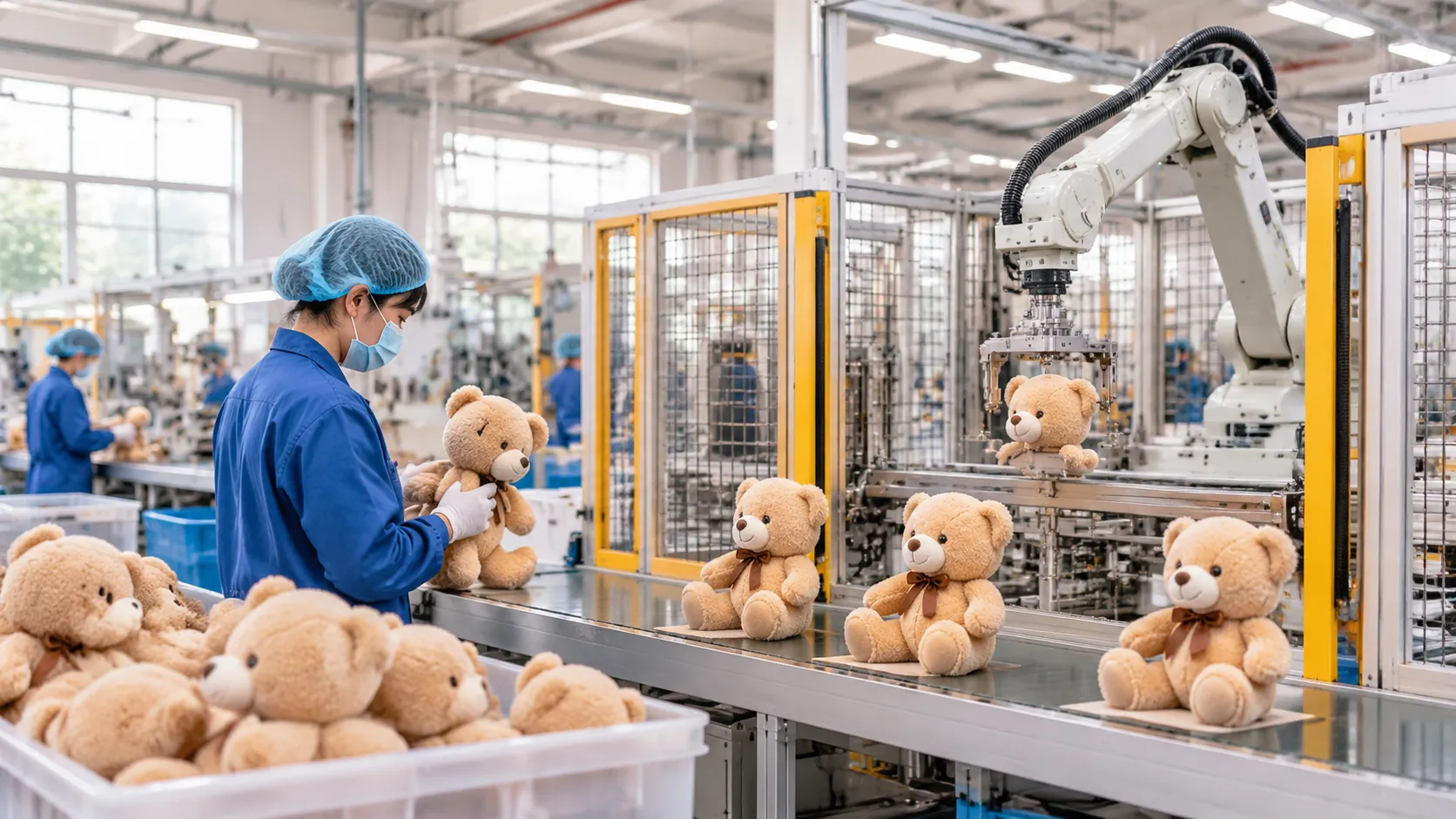
Process: Bespoke 2D-to-3D pattern drafting, physical prototype sampling, automated cutting, precision embroidery, and child-safe assembly.
Pros: Direct-from-factory pricing, full customization from fabric to woven tags, and strict safety standard compliance.
Cons: Involves upfront sample development fees and structured production lead times.
How to Choose the Best Supplier for Your Project
Use this breakdown to determine where to get custom plushies made based on your specific operational goals:
| Supplier Type | Best For | Typical MOQ | Pricing Per Unit | Customization Depth |
|---|---|---|---|---|
| Independent Crafter | Art collectors, single gifts | 1 pc | Premium ($150–$500+) | High (manual craft) |
| Middleman Platforms | Rapid personal gifts | 1–5 pcs | Moderate to High | Low (template-locked) |
| OEM Plush Factory | Artists, brands, businesses | Low MOQ / Bulk | Factory-Direct (Scalable) | Complete (full bespoke 3D) |
To get custom plushies made efficiently, choose independent makers for single personal items, and partner directly with an OEM plush manufacturer when you need market-ready quality, customized branding, and scalable unit costs.
How to Get Custom Plushies Made: The 5-Step Process
1. Prepare Your Design Files and Reference Sheets
Every custom character plush starts with clear visual references. While we can work from a simple illustration or character sketch, detailed art helps us match your vision much faster.
-
- Turnaround views: Front, back, and side profiles give our pattern makers the geometry needed for a true 3D shape.
- Key dimensions: Define the target height or sitting height (for example, 20 cm / 8 inches).
- Callout details: Point out must-have features such as blush gradients, specific embroidery lines, or distinct accessories.
- Color targets: Standard digital color values (Pantone or Hex) help us pick the closest physical plush fabrics.
2. Request a Detailed Quote and Verify Terms
Once you submit your reference sheets, we assess the design's structural complexity, fabric requirements, and sizing to calculate your custom plush toy cost.
During this step, you receive a transparent breakdown covering:
-
- Sample development fee: A one-time charge covering custom pattern drafting, fabric sourcing, and prototype assembly.
- Unit production price: Scaled according to your expected order volume, size, and material grade.
- Order minimums: We provide low minimum order quantity options for small-batch plush toy production alongside high-volume pricing tiers.
3. Develop and Review a Physical Prototype Sample
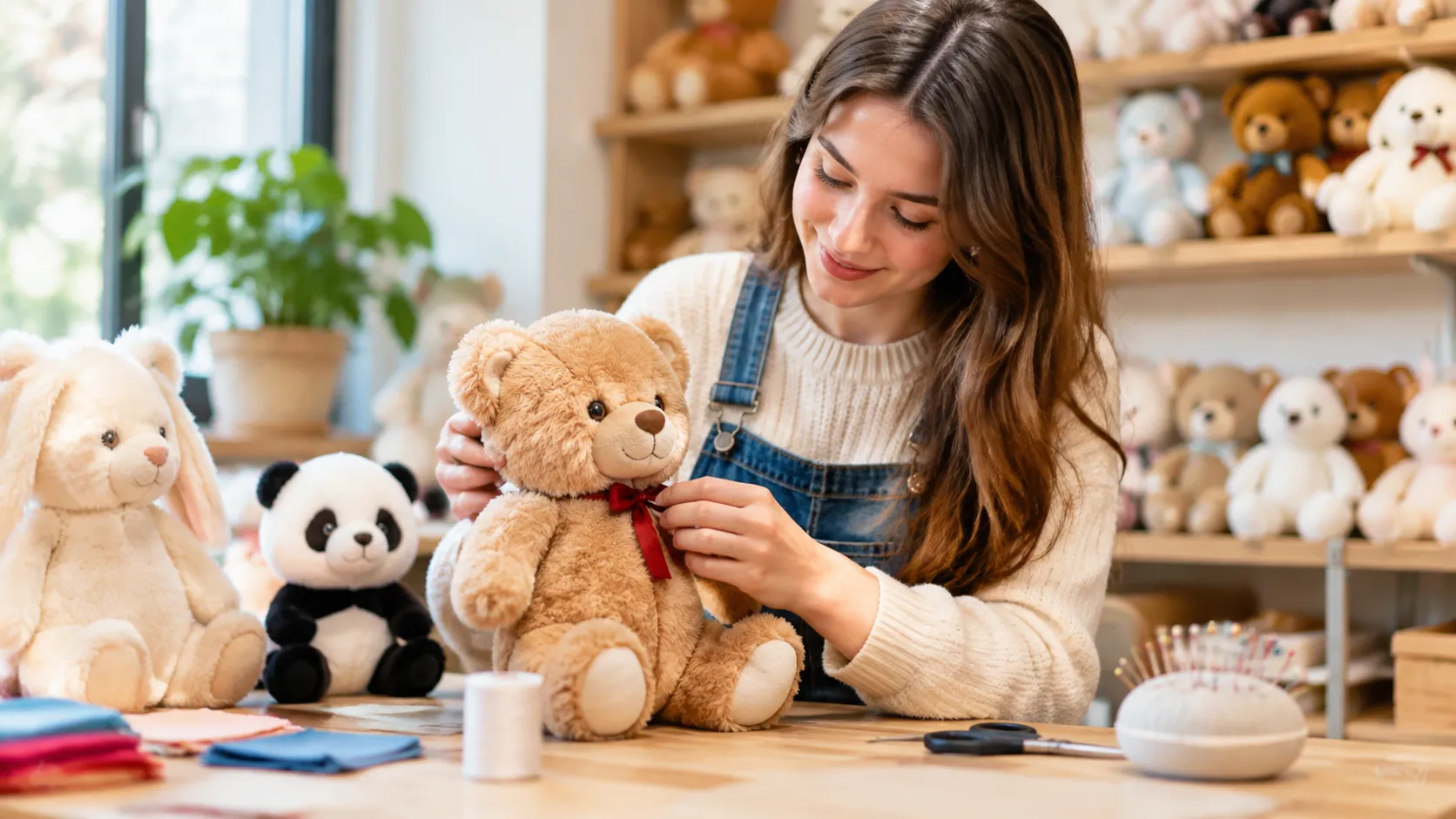
Never go straight into bulk production without holding a proof. During the prototyping stage, our master pattern makers hand-tailor your initial custom plush sample.
-
- Pattern cutting & sewing: Translating your 2D lines into sculpted fabric panels.
- Detail placement: Stitching facial features with computerized embroidery and testing proper PP cotton firmness.
- Photo and video review: We send clear, multi-angle photos and videos showing the prototype in natural lighting.
- Iterative adjustments: You give feedback on facial proportions, ear angles, or stuffing density, and we refine the sample until you approve it.
4. Confirm Mass Production Specifications
After you sign off on the golden master sample, mass production begins. Whether you are producing a mascot or scaling up dedicated brand IP merchandise solutions, locking down these parameters ensures consistency across every piece in your run:
-
- Fabric batching and laser cutting: High-precision fabric cutting keeps panel dimensions identical.
- Automated embroidery & printing: Facial features, brand logos, and intricate surface patterns are stitched or sublimated onto cut pieces.
- Assembly and stuffing: Skilled machinists sew the outer shells before filling them with clean, resilient PP cotton stuffing.
- Custom plush tags and packaging: Woven seam tags, illustrated cardstock hangtags, and protective polybags are added to prepare your plush for retail.
5. Quality Inspection, Packaging, and International Shipping
Before any plush leaves the workshop floor, it goes through strict safety and quality control checkpoints.
| Production Check | What We Inspect |
|---|---|
| Metal & Needle Detection | Every single finished plush passes through a digital needle detector to ensure zero broken sewing needles remain inside. |
| Seam Pull Testing | Seams and small attached parts are stress-tested to meet international child-safety pull standards. |
| Visual Finishing | Loose threads are clipped, fabric is brushed clean, and facial embroidery alignment is checked piece by piece. |
| Custom Packaging | Barcodes, custom boxes, or individual retail polybags are applied according to your specifications. |
| Door-to-Door Delivery | We manage customs clearance and ship your bulk order via air express for quick turnarounds or sea freight for economical bulk delivery. |
Understanding how to get custom made plushies through a structured factory process keeps your production budget on track and eliminates manufacturing surprises.
What Can You Customize on a Plush Toy?
When you work with us to get custom plushies made, you control every physical detail from the initial stitch to retail packaging. We transform flat 2D concept art into fully realized 3D soft toys built to your exact specifications.
Custom Shapes, Characters, and Size Dimensions
We construct custom plushies across all styles, proportions, and functions:
-
- Character Archetypes: Anime dolls, chibi humanoids, animal companions, stylized brand mascots, and geometric shapes.
- Product Formats: Mini plush keychains (under 10 cm), standard display plushies (15–30 cm), giant plush characters, and functional plush pillows and cushions.
- Pattern Precision: Custom seam mapping ensures character silhouettes, limb proportions, and head shapes match your design sheets accurately.
Plush Fabrics, Textures, and Stuffing Choices
The choice of outer fabric and internal fill defines how your plush looks, feels, and holds its form over time.
| Component | Available Options | Best For |
|---|---|---|
| Crystal Super-Soft | Ultra-plush, dense, short-pile polyester | Anime characters, chibi dolls, soft toys |
| Minky Fabric | Silky finish, slight stretch, micro-pile | High-end retail plushies, collector items |
| Velboa | Short, durable pile with low stretch | Structured animal plushies, firm mascots |
| Faux Fur | Long pile, textured strands | Hair pieces, animal tails, fluffy accents |
| Felt & Fleece | Non-pile, smooth, flat surface | Small accessories, wings, weapon props |
| Stuffing | 100% resilient PP cotton fill | Balanced firmness, shape memory, cuddly feel |
Embroidery, Screen Printing, and Facial Features
Capturing expression requires clean decorative execution. We pair structural pattern-making with two core detailing techniques:
-
- High-Density Computer Embroidery: Our standard approach for eyes, mouths, paws, and clean line work. It provides raised texture, rich colors, and long-lasting durability.
- Digital Sublimation & Heat Transfer: Used for complex gradients, blushed cheeks, fine micro-patterns, or hyper-detailed costume prints that cannot be sewn via thread.
Custom Clothing, Accessories, and Branded Tags
For commercial runs and promotional branded plush lines, finishing details elevate a basic toy into retail-ready merchandise.
-
- Outfits & Outerwear: Removable hoodies, magnetic hats, capes, jackets, and miniature shoes tailored to the doll's proportions.
- Internal Add-ons: Posable wire armatures for articulated limbs, squeakers, internal rattles, and embedded magnets in hands or accessories.
- Brand Packaging: Custom woven fabric care tags stitched into body seams, full-color illustrated cardstock hangtags, and branded polybag packaging.
How Much Does It Cost to Get Custom Plushies Made?
When planning your budget to get custom plushies made, pricing divides into two distinct stages: the initial prototyping phase and mass manufacturing. Because every character design requires unique pattern drafting and material sourcing, quotes are tailored to your exact design specifications.
Key Cost Factors That Impact Your Final Quote
Several technical variables determine the production quote for your project:
-
- Size and Dimensions: A character's scale dictates fabric consumption and stuffing weight. Compact mini plush toys require intricate hand-assembly for tight seams, while oversized pieces or giant plush toys require substantial yardage of fabric and high-density PP cotton.
- Pattern Complexity: Simple, rounded geometric mascots require fewer cut panels. Detailed humanoid dolls with layered hair, distinct limbs, or multi-piece outfits require complex pattern engineering.
- Surface Detailing: Standard high-density computer embroidery for facial features is cost-efficient. Intricate gradient printing, heat transfers, or complex all-over sublimation prints require additional processing steps.
- Material Selection: Standard crystal super-soft plush and minky are cost-effective choices. Specialty textiles, long-pile faux furs, or custom-dyed fabrics adjust the base material cost.
- Internal Add-ons: Features like posable wire armatures, squeakers, rattles, or embedded magnets add to the assembly time.
- Custom Packaging: Standard clear polybags are the baseline. Branded woven sewn-in labels, illustrated cardstock hangtags, and custom printed retail boxes add small increments to the unit cost.
Sample Development Fees vs. Unit Production Pricing
Understanding the difference between sampling costs and unit manufacturing costs ensures clear financial planning:
-
- Sample Development Fee: This is a one-time upfront fee to create the physical prototype before bulk production. It covers master pattern engineering, test cutting, embroidery machine setup, hand-stitching, and revision cycles. For qualifying bulk orders, we credit this fee back toward your mass production invoice.
- Unit Production Price: This is the per-piece cost for your bulk run. Because initial setup costs are handled during sampling, the unit price reflects only raw materials, factory assembly labor, quality control, and export packaging.
How Minimum Order Quantities (MOQ) Affect Your Budget
Plush production relies on manufacturing efficiencies. Setting up computerized embroidery frames, cutting dies, and textile rolls requires fixed labor regardless of the batch size:
-
- Small-Batch Runs (Low MOQ): Ordering small quantities allows indie creators and brands to launch merchandise with minimal upfront inventory risk. However, the fixed setup costs are distributed across fewer items, resulting in a higher per-unit cost.
- Volume Scaling (500–1,000+ Units): As your order volume increases, unit prices decrease significantly. Bulk textile purchasing, continuous laser cutting, and automated sewing runs optimize factory output and provide the best profit margins for retail and distribution.
How to Choose a Reliable Custom Plush Manufacturer
Picking the right manufacturing partner determines whether your design turns into a collector-grade product or a flat, misshapen disappointment. When you want to get custom plushies made smoothly, evaluate potential partners using these practical criteria.
Reviewing Past Factory Samples and Portfolio Work
Never rely on digital mockups alone. We always tell creators to inspect physical samples from past production runs before making any commitments.
-
- Stitch Density and Seam Strength: Clean seams without exposed thread ends or puckering along curves.
- Embroidery Precision: Crisp facial details, consistent thread tension, and smooth edges around eyes and mouths.
- Pattern Translation: The ability to convert flat 2D lines into well-proportioned 3D silhouettes without losing character personality.
Take a close look at our past work on custom plush toys to evaluate physical build quality, fabric finishes, and shape accuracy.
Evaluating Maker Communication and Revision Rules
A reliable custom plush toy manufacturer works collaboratively with you throughout the sampling stage. Communication breakdowns early on can lead to costly delays later.
-
- Clear Feedback Loops: Make sure your manufacturer offers photos and videos of the initial plush toy prototype from multiple angles.
- Revision Terms: Clarify how many adjustment rounds are included in your sample fee before mass production kicks off.
- Direct Access: Work with a team that provides realistic timelines, material recommendations, and actionable advice on your artwork rather than just saying yes to everything.
Verifying Toy Safety Standards and Material Compliance
If you plan to sell your plushies commercially, product safety is non-negotiable. Legitimate factories use certified fabrics and maintain strict workshop quality control.
| Safety Check | What We Look For | Why It Matters |
|---|---|---|
| Fabric Sourcing | Non-toxic dyes, certified soft plush, and new PP cotton | Prevents chemical irritants and skin sensitivity |
| Physical Strength | Securely stitched seams, embroidered features | Eliminates choking hazards on small parts |
| Metal Detection | Double-pass needle detection checks | Ensures no broken sewing needles remain inside the plush |
| International Standards | Compliance with ASTM F963, EN71, and CPSIA | Required for retail distribution across North America and Europe |
Protecting Intellectual Property and Design Ownership
Your character designs, sketches, and branding assets are your most valuable property. Before sending full turnaround sheets or vector files to get custom made plushies, confirm your partner's IP policies:
-
- Non-Disclosure Agreements (NDAs): A reputable factory will readily sign an NDA to safeguard your original concepts.
- Design Exclusivity: Ensure your mold, pattern, and artwork will never be repurposed, sold to third parties, or listed in public catalogs without permission.
- Ownership of Patterns: Confirm that once production begins, the custom patterns developed for your project remain tied strictly to your account.
Common Mistakes to Avoid When Ordering Custom Plushies
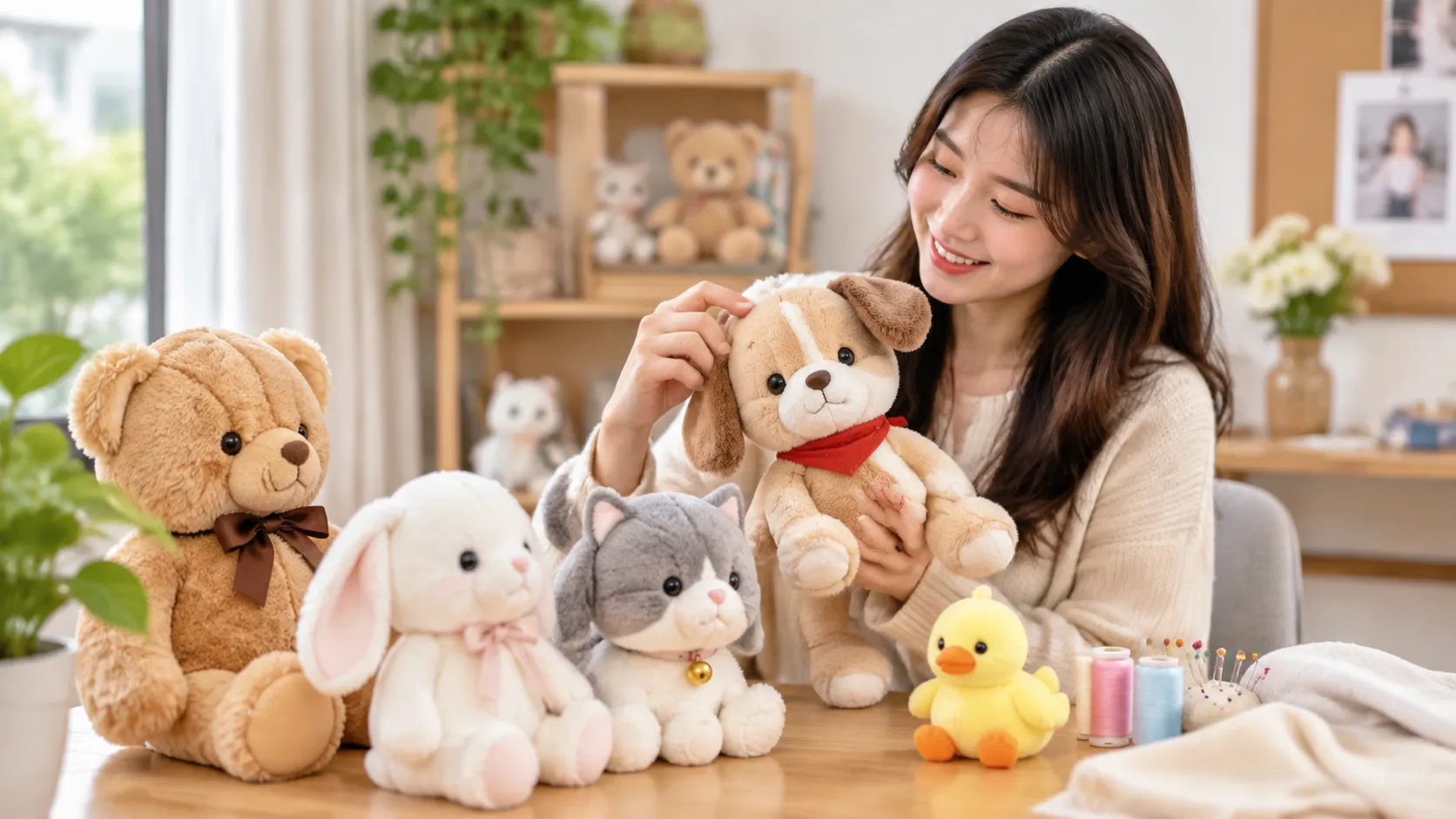
When figuring out how to get custom plushies made without unexpected costs or delays, dodging common production pitfalls saves both budget and sanity. We see creators run into the same hurdles time and again during the manufacturing run. Here is what to watch out for before you commit:
-
- Submitting vague artwork without turnarounds: A single flat front illustration leaves too much guesswork for pattern makers. If our team cannot see the back, side, tail, or hair placement, the 3D interpretation might not match your vision. Always supply multi-angle concept art with defined proportions.
- Chasing the lowest unit price over quality: Bargain-basement factory quotes usually mean compromised materials, flimsy stitching, or cheap filler that breaks down quickly. Safe fabrics, neat computer embroidery, and structural integrity require skilled labor and certified textiles.
- Skipping a physical prototype before bulk production: Rushing directly into mass manufacturing without a tangible plush sample is a recipe for disaster. Reviewing a physical prototype lets you evaluate fabric pile, firmness, and facial alignment firsthand through our process and quality control checkpoints before running hundreds of units.
- Miscalculating production lead times and freight delays: Custom manufacturing is not overnight work. Pattern drafting, fabric dyeing, sample revisions, bulk assembly, needle detection, and international freight take time. Always build a safety buffer into your timeline for convention drops, holiday retail rushes, or product launches.
Custom Plush Production Checklist
Before you move forward to get custom plushies made, running through a practical checklist saves time, avoids costly pattern adjustments, and keeps your project on schedule. We use this step-by-step checklist to guide creators and brands through a smooth manufacturing run.
| Production Phase | Key Requirements | Verification Focus |
|---|---|---|
| 1. Artwork Readiness | Multi-angle character turns (front, side, back) | Clear color breaks, visible seams, high-res files |
| 2. Specifications | Dimensions, fabric textures, stuffing volume | Child-safe materials, non-toxic compliance |
| 3. Prototype Sign-Off | Photo/video review, sample adjustments | Proportions, embroidery accuracy, physical touch |
| 4. Branding & Delivery | Custom tags, polybags, shipping terms | Barcodes, care labels, door-to-door logistics |
Artwork and Reference Sheet Readiness
-
- Turnaround Views: Provide front, side, and rear illustrations so our pattern makers understand the three-dimensional build.
- Color Definitions: Specify exact color codes or flat graphics to avoid shade mismatches during fabric sourcing.
- Feature Callouts: Clearly mark which elements require high-density computer embroidery versus digital sublimation printing.
Sizing, Material, and Safety Specifications
-
- Defined Dimensions: Lock in the target sitting or standing height, whether you are developing small plush keychains or larger custom plush dolls.
- Fabric Choices: Choose your exterior textures—such as crystal super-soft plush, minky, velboa, or fleece—paired with premium PP cotton stuffing.
- Safety Compliance: Confirm that all materials meet international toy safety standards, using non-toxic fabrics and needle-detection inspection protocols.
Prototype Sign-Off and Revision Tracking
-
- Sample Review: Assess initial prototype photos and videos for shape accuracy, facial placements, and overall silhouette.
- Consolidated Feedback: Compile specific, actionable revisions in a single round to speed up pattern adjustments.
- Physical Approval: Review the revised physical prototype to test fabric feel and firmness before greenlighting mass production.
Branding Labels, Packaging, and Delivery Setup
-
- Label Details: Finalize artwork for custom woven fabric tags, sewn-in care labels, and branded paper hangtags.
- Protective Packaging: Choose individual protective polybags or custom-printed retail packaging suitable for direct distribution.
- Logistics Plan: Verify shipping addresses, carton labeling, and fulfillment schedules for commercial custom mascot plush toys and retail collections to ensure smooth customs clearance and on-time global delivery.
Frequently Asked Questions About Getting Custom Plushies Made
Can I get a plush made from a simple sketch or drawing?
Yes. You do not need professional manufacturing schematics to get started. We regularly turn artwork into a plush toy using hand-drawn sketches, flat digital illustrations, game art, or pet photos. Having front, side, and back views makes the pattern translation faster, but a clear 2D character sketch is all we need to map out your design.
Do I need a 3D model to start plush production?
No 3D modeling files (like OBJ or STL) are required. Our pattern makers manually interpret your flat artwork to build the sewing pattern from scratch. We calculate the seam lines, contours, and fill volumes needed to bring a custom character plush from flat art into a physical, three-dimensional form.
How long does the entire custom plush process take?
Production timing breaks down into two core stages:
Sampling Phase: 1 to 2 weeks to source materials, cut patterns, complete embroidery, and assemble your initial prototype.
Mass Production: Typically 3 to 5 weeks once you approve your physical sample, depending on order volume and detail complexity.
Fulfillment: Door-to-door international freight adds standard transit time depending on whether you choose air or sea shipping.
Can I get just one custom plush made?
You can order a single physical piece during the prototyping phase. Creating one plush requires dedicated pattern making, fabric cutting, and embroidery setup, which is covered by the one-off sample fee. While factory-direct runs focus on batch manufacturing, we keep our minimum order quantity (MOQ) low so indie creators and brands can run small batches without high upfront barrier costs.
Can the manufacturer make custom tags and retail packaging?
Yes. We provide complete end-to-end branding for retail-ready distribution:
Sewn-in Fabric Tags: Woven or printed satin care and logo labels.
Cardstock Hangtags: Full-color custom die-cut tags attached with plastic or cotton loops.
Packaging Options: Individual branded polybags, eco-friendly dust bags, or printed retail gift boxes.
What exact details do I need to send to get an accurate quote?
To receive a firm unit price and sampling quote without guesswork, send us:
Visual Reference: Clear artwork or turnarounds showing all sides of the character.
Target Size: Intended height or width (for example: 8 inches, 20 cm, or 12 inches).
Order Quantity: Your initial target run size (such as 100, 500, or 1,000 pieces).
Special Additions: Specific fabric preferences, magnetic limbs, squeakers, or detailed accessories.