Are you struggling to turn your custom design into a high-quality finished product?
Pick the wrong factory, and you risk cheap materials, safety compliance failures, and costly delays. Pick the right one, and you set your brand up for massive success.
In this guide, you’ll learn step-by-step how to choose a plush toy manufacturer that delivers premium craftsmanship, protects your IP, and scales with your business.
Let’s dive right in.
Factory vs. Sourcing Agency: Who Are You Working With?
When sourcing custom stuffed animals, the first decision shapes your entire supply chain: do you work directly with a plush toy factory, or through a third-party sourcing agent? Knowing who handles your production affects your unit costs, quality control, and speed to market.
Direct Plush Toy Manufacturer: OEM/ODM Control
Partnering directly with an OEM/ODM plush supplier gives you direct access to the production floor and the pattern makers building your designs.
-
- Factory-Direct Pricing: Eliminate intermediary commissions and trading markups, protecting your profit margins.
- Direct Technical Feedback: Speak directly with master pattern makers about fabric stretch, seam tolerances, and 2D-to-3D design feasibility.
- Total Production Control: Monitor raw material sourcing, sewing precision, and batch scheduling in real time.
- Immediate Quality Accountability: Resolve manufacturing defects or stitch issues on the line without middleman delays.
Sourcing Agents and Trading Companies: Weighing the Trade-offs
Sourcing agents and trading firms can assist teams lacking import experience, but they introduce distinct operational risks for custom plush manufacturing:
-
- Compounded Costs: Trading firms add a 15% to 30% margin on unit costs and sample fees.
- Communication Gaps: Technical specifications get lost in translation when your tech pack passes through account managers rather than factory engineers.
- Accountability Risks: If a production run fails needle detection or safety compliance, brokers often shift blame between the buyer and the subcontracted facility.
| Evaluation Metric | Direct Plush Toy Factory | Sourcing Agent / Trader |
|---|---|---|
| Pricing Structure | Transparent, direct labor & raw material costs | Tiered markups and hidden sourcing commissions |
| Technical Expertise | In-house pattern designers and sample rooms | Generalist sales reps with limited production skill |
| Line Accountability | Direct ownership of QC, defects, and deadlines | Diffused liability across outsourced subcontractors |
| Schedule Control | Direct scheduling on dedicated sewing lines | Dependent on external factory production slots |
How to Verify a True Plush Toy Factory
Brokers often present themselves as primary manufacturers. You can verify direct factory status through four quick checks:
-
- Review Business Licenses: Check the official business scope. True manufacturers list "production," "processing," or "manufacturing" of toys and textiles, whereas intermediaries list "trading," "consulting," or "wholesale."
- Conduct Live Video Audits: Request a real-time video walkthrough during working hours. Ask to see the fabric-cutting tables, the main sewing lines, and the physical sample development room.
- Verify Facility Ownership: Check that third-party audit reports (such as BSCI, ICTI, or ISO 9001) match the company name, tax ID, and address on your proforma invoice.
- Evaluate Sample Room Responsiveness: Direct manufacturers have in-house master pattern makers who can suggest immediate structural modifications and select available stock fabric swatches right from the factory floor.
How to Choose a Plush Toy Manufacturer: 7 Core Evaluation Criteria
1. Design Interpretation and Prototyping
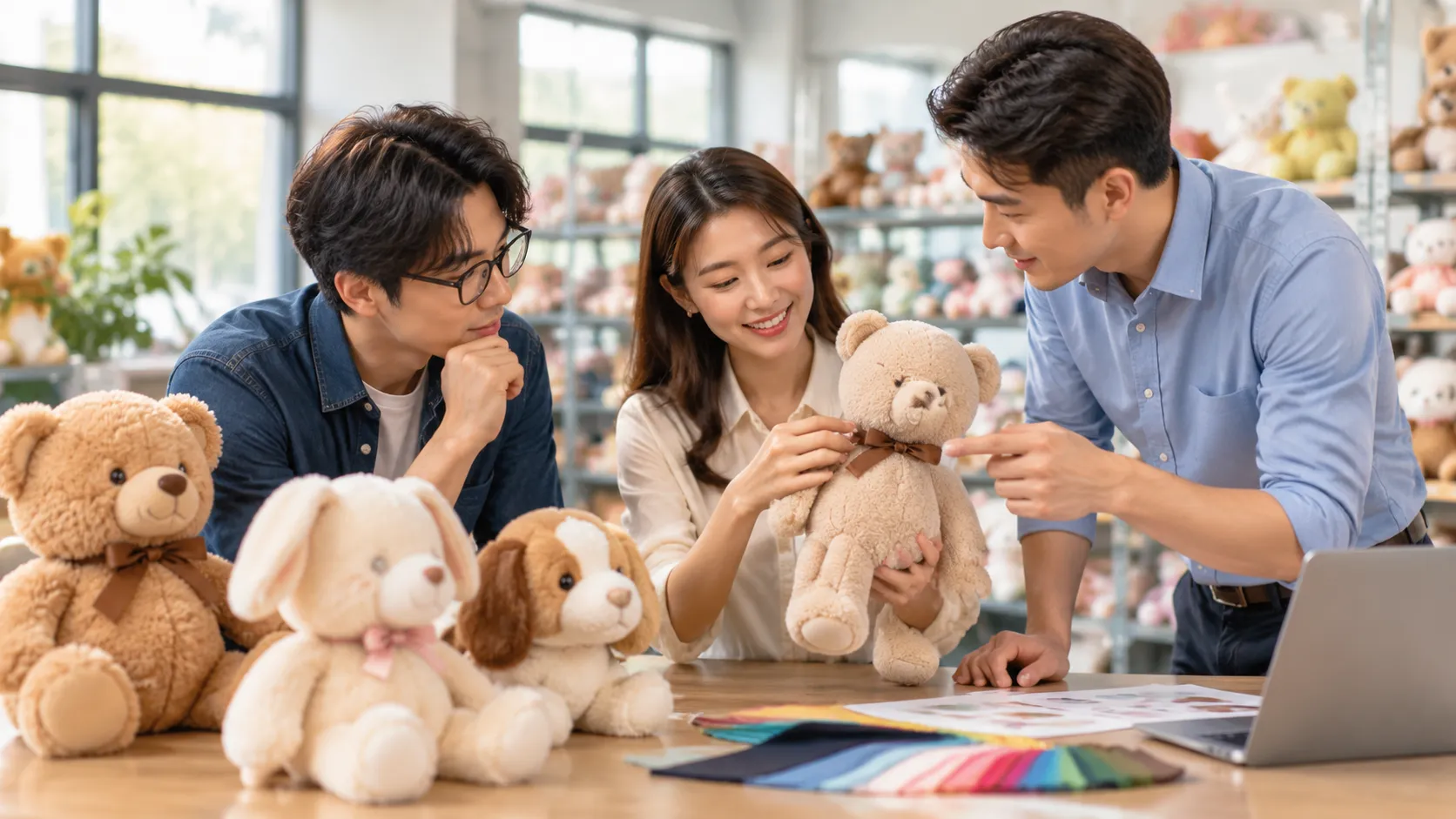
A factory must translate flat 2D character sheets into balanced, three-dimensional plush forms without losing character identity.
-
- Pattern-Making Expertise: Skilled master pattern makers sculpt complex curves, maintain symmetry, and preserve expression proportions.
- Turnaround Timelines: Standard plush toy sampling takes 7 to 14 working days, depending on fabric sourcing and patterning complexity.
- Revision Handling: Reliable makers offer structured revision rounds, sharing digital updates and physical photo angles before shipping final physical prototypes.
2. Toy Safety Compliance and Lab Verification
Plush toys enter regulated global markets and must pass strict chemical and mechanical safety audits.
| Market | Mandatory Regulations & Standards | Key Focus Areas |
|---|---|---|
| United States | CPSIA, ASTM F963, CPC (Children's Product Certificate) | Lead, phthalates, small parts choking hazards, flammability |
| European Union | EN71 (Parts 1, 2, 3), CE Mark, REACH | Heavy metal migration, chemical limits, mechanical durability |
| Global | ISO 8124 | Physical, mechanical, and flammability parameters |
Always verify that supplier test reports originate from recognized, accredited laboratories like SGS, TÜV, or Intertek. Cross-check the report number and product description directly in the issuing lab’s online verification database. For infant-targeted items (ages 0-36 months), insist on fully embroidered facial features, no detachable hard plastic eyes, and zero small parts.
3. Material Sourcing and Component Standards
Fabric feel and durability directly define market value. A capable factory sources certified raw materials tailored to your project:
-
- Outer Fabrics: High-density crystal super-soft velboa, plush minky, realistic faux fur, certified organic cotton, and eco-friendly recycled RPET fabrics.
- Fillings & Inserts: 100% virgin hypoallergenic PP cotton for optimal bounce and shape retention, high-density memory foam, or weighted non-toxic plastic pellets secured inside sealed, double-stitched inner fabric pouches.
- Decoration Methods: Detailed computerized embroidery for line work and eyes, silk screen printing for bold logos, or heat-sublimation printing for intricate gradients on custom items like promotional branded plush and tailored accessories.
4. Quality Control and Mechanical Safety
Factory quality control must function at every stage of production, not just right before packing:
-
- Incoming & Cutting Checks: Fabric batch inspection for color consistency and pile direction, followed by precise laser cutting or die-cutting.
- Inline Seam Reinforcement: Reinforced double-stitching along stress points and functional seams, especially on complex shapes or wearable items like plush bags and pouches.
- Mechanical Safety Testing: Consistent seam pull tests (exerting 21 lbs / 90 Newtons of continuous tension) to prevent seam failure.
- Needle & Metal Detection: Every finished plush must pass twice through calibrated two-probe conveyor needle detectors to ensure zero broken needle fragments remain inside the product.
5. Production Capacity and MOQ Flexibility
Every brand has distinct volume requirements. A balanced factory accommodates emerging brands with realistic Minimum Order Quantities (MOQs)—typically starting between 500 and 1,000 units per design—while maintaining multi-line production capacity to scale up to tens of thousands of units for seasonal peaks without bottlenecking.
6. IP Protection and Strict Confidentiality
Your proprietary character designs and product concepts represent high-value intellectual property.
-
- Bilingual NDAs: Sign enforceable Non-Disclosure Agreements before sending 3D files or character turnarounds.
- Sample & Mold Ownership: Explicitly retain complete ownership of all custom patterns, dies, and embroidery punch files.
- Prototype Secrecy: Enforce strict contractual rules barring the factory from displaying your unreleased designs in public showrooms, trade booths, or third-party online marketplaces.
7. Lead Times and Export Logistics
Material procurement typically takes 10 to 15 days, followed by 30 to 45 days for mass sewing, stuffing, and packing. When evaluating suppliers, assess their logistics execution:
-
- Clear Shipping Terms: Transparent quoting across FOB (Free on Board), CIF (Cost, Insurance, and Freight), and turnkey DDP (Delivered Duty Paid).
- Documentation & Customs: Clean commercial invoices, packing lists, harmonized system (HS) toy codes, and export clearance to prevent costly port delays.
Red Flags When Vetting a Plush Toy Supplier
Knowing how to choose a plush toy manufacturer means spotting problems before sending a deposit. When I evaluate an OEM/ODM plush supplier, certain warning signs immediately tell me to walk away.
Critical Warning Signs During Supplier Vetting
| Red Flag | The Hidden Risk | What to Demand Instead |
|---|---|---|
| Unusually Low Quotes | Material downgrades (recycled waste filling instead of virgin hypoallergenic PP cotton), sudden price hikes before shipping, or cut corners on stitching. | Transparent itemized quotes specifying exact fabric weights, stuffing grades, and packaging components. |
| Evasive Audit & Test Answers | The supplier is likely an unauthorized broker, lacks genuine ASTM F963 or EN71 certifications, or fails baseline safety standards. | Verified third-party lab reports (SGS, Intertek, TÜV) and current factory audit reports (BSCI, ICTI, ISO 9001). |
| Refusal to Sign an NDA | Risk of your proprietary character art or patterns being duplicated, showcased publicly, or resold to competitors. | A signed bilateral IP protection agreement before sharing high-resolution tech packs or vector artwork. |
| Vague Technical Feedback | Inexperienced pattern makers who cannot accurately translate 2D artwork into 3D plush, resulting in endless, costly sample revisions. | Concrete pattern notes, clear embroidery limitations, and proactive material recommendations. |
Unusually Low Quotes and Material Substitutions
A quote significantly lower than the industry baseline is rarely a bargain. In plush toy production, extreme discounts usually mean cheap substitutes: low-density pile fabric instead of crystal super-soft velvet, non-compliant dyes, or low-grade scrap stuffing. These shortcuts cause failed pull tests, inconsistent shapes, and safety recalls.
Evasive Responses to Factory Audits and Safety Testing
If a vendor stalls when asked for a Children’s Product Certificate (CPC), accredited lab testing records, or permission for on-site third-party quality control inspections, treat it as an immediate disqualifier. A legitimate plush toy factory welcomes full visibility into its clean needle detection logs, metal detection protocols, and safety compliance records.
Refusal to Sign IP Protection Agreements
Safeguarding original character artwork is critical when producing brand IP merchandise. If a factory hesitates to sign a binding Non-Disclosure Agreement (NDA) or reserves the right to display your unreleased samples on public showroom floors and trade portals, they do not respect your intellectual property.
Slow or Unclear Technical Communication
Reliable manufacturers provide practical engineering feedback on your artwork within days. If a supplier takes weeks to review a basic spec sheet or gives generic answers about fabric types, embroidery tolerances, and seam construction, expect severe communication gaps and production delays during bulk manufacturing. Reviewing a comprehensive plush toy design and manufacturing guide helps establish these technical baselines before production begins.
How to Prepare a Plush Toy Tech Pack for an Accurate Quote
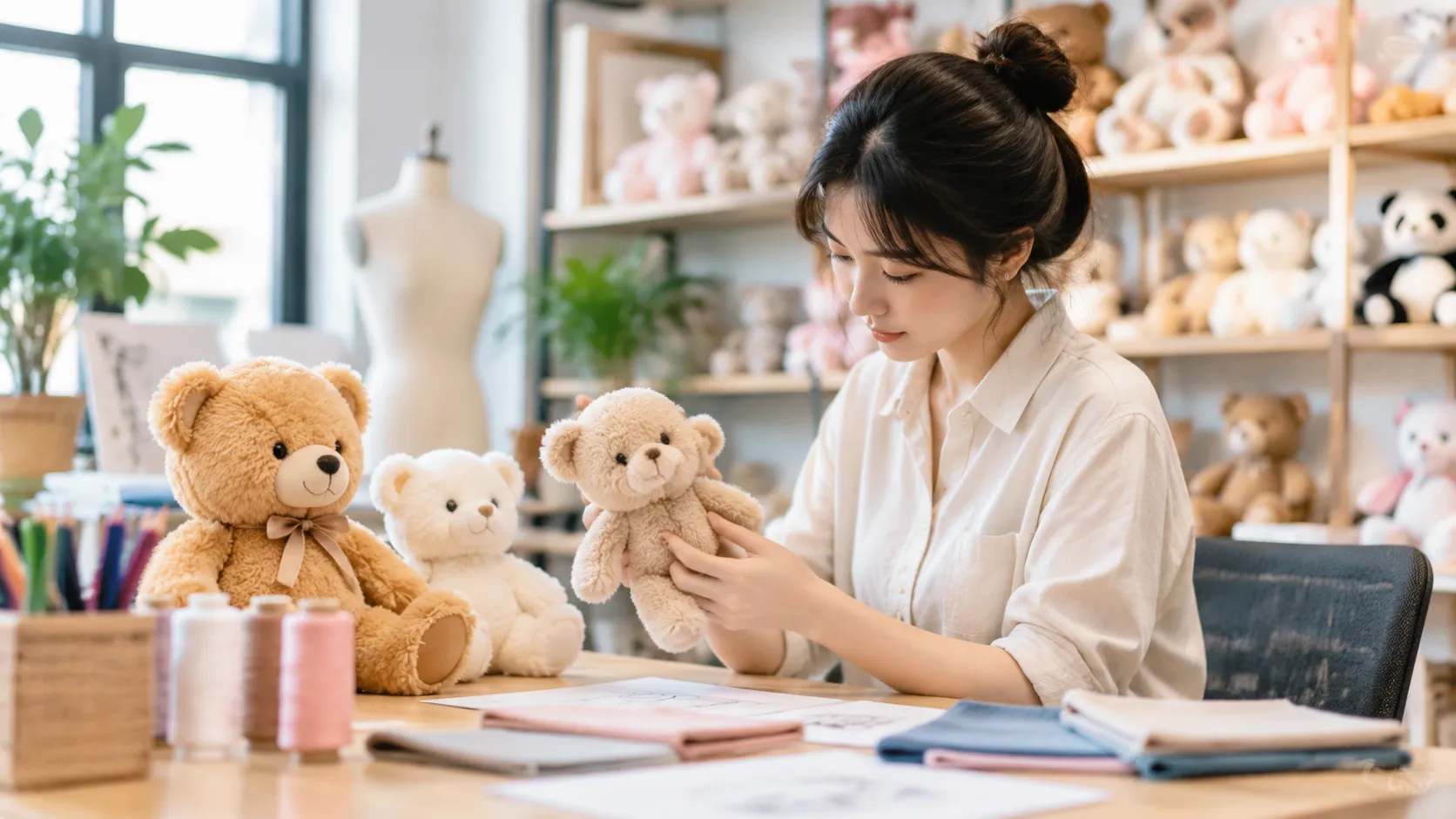
When you evaluate how to choose a plush toy manufacturer, your technical pack (tech pack) serves as the ultimate baseline for precision. A complete tech pack eliminates guesswork, avoids costly sample revisions, and ensures the factory provides a binding, accurate production quote rather than a rough estimate.
To quote your project effectively, we require clear visual references, exact dimensions, and precise material choices.
Multi-Angle Artwork and Character Views
A single front illustration is never enough for accurate pattern drafting. Whether you are producing original mascots or complex custom character plush toys, supply orthographic 2D vector files (AI, PDF, or high-res PNG) covering:
Front View: Displays facial alignment, body proportions, and chest details.
Side Profiles (Left & Right): Clarifies snout depth, ear angles, limb curvature, and posture.
Back View: Shows tail placement, spine seams, and zipper or closure positions.
Top & Bottom Views: Essential for irregular body silhouettes, sitting stances, or complex foot pads.
Dimensions, Proportions, and Tolerances
Specify whether dimensions apply to a standing or seated position. Define the total height, width, and depth in inches or centimeters. Always establish standard plush manufacturing tolerances—typically +/- 0.5 to 1 cm (0.2 to 0.4 inches)—to account for manual sewing and stuffing variations.
Pantone Colors for Fabrics and Details
Colors render differently across digital screens. We use the Pantone Matching System (PMS) to ensure production aligns with your brand standards:
Fabric Shell: Specify PMS codes for base body fabric and contrasting accent panels.
Embroidery Thread: List exact thread color codes for eyes, mouth, and logos to avoid color mismatch.
Hardware & Accessories: Assign PMS codes to safety plastic eyes, buttons, or custom zippers.
Fabric, Stuffing, and Component Specifications
Clearly itemize every physical layer of your design to avoid unapproved material substitutions:
Outer Fabrics: Define the material type and pile length (e.g., crystal super-soft velvet, short-pile velboa, minky, or recycled RPET plush).
Inner Filling: Specify density and materials, such as 100% virgin hypoallergenic PP cotton, slow-rebound foam, or weighted plastic PE/glass pellets sealed in a reinforced safety inner pouch.
Decoration Methods: Indicate which elements require high-density flat embroidery, 3D puff embroidery, silk-screen printing, or heat sublimation.
Packaging and Labeling Requirements
Retail-ready packaging significantly impacts shipping volume and final landing costs. Detail all required packaging components in your tech pack:
Sewn-in Labels (Tush Tags): Detail artwork, legal tracking information, wash instructions, and mandatory regulatory markings (e.g., CE, UKCA, batch numbers).
Hangtags: Specify paper stock (e.g., 350gsm coated art paper), surface lamination (matte/gloss), hole punches, and plastic fasteners.
Individual Bags: Define self-adhesive polybag thickness, mandatory air-hole perforations, and printed child suffocation warnings.
Master Carton Limits: State any maximum gross weight restrictions or palletization rules required by your fulfillment center.
| Tech Pack Element | Critical Specification Required | Why It Affects the Quote |
|---|---|---|
| Character Views | 4-way orthographic views (Front, Back, Sides) | Determines pattern complexity and labor minutes per unit |
| Dimensions | Height, width, seated posture + tolerances | Directly impacts fabric yield and master carton shipping volume |
| Color Codes | Pantone PMS numbers for fabrics and threads | Prevents custom fabric dyeing fees for standard stock colors |
| Materials & Filling | Fabric pile, virgin PP cotton, weighted pellets | Controls raw material unit costs and required safety testing tiers |
| Packaging | Tush tags, hangtags, polybags, retail boxes | Adds packaging production costs and assembly labor time |
Buyer’s Checklist: How to Choose a Plush Toy Manufacturer
Before committing capital to physical prototypes, asking the right questions separates capable factories from intermediaries. When evaluating a potential partner, I always recommend running through a structured vetting framework to assess production capability, commercial viability, and risk management.
Factory Status, Sampling, Materials, and Safety Testing
Direct communication with the production floor prevents pattern misinterpretation and avoids hidden markups. Before paying any initial fees, I verify how the facility manages the development and quality control phases:
-
- Facility Verification: Are you a direct manufacturer, or do you outsource sewing and assembly? Can you provide a live video walkthrough of your sample development room and cutting workshops? Reviewing verifiable company credentials on our custom plush toy factory background provides a baseline for the transparency you should expect.
- Prototyping Process: How many revision rounds are included in the sample fee? What is the standard sample lead time (typically 7–14 business days)?
- Material Sourcing & Safety: Do you provide factory certificates for hypoallergenic PP cotton and non-toxic fabrics like crystal super-soft velvet or RPET? Can you supply existing test reports showing compliance with ASTM F963, CPSIA, or EN71 standards?
- In-Line Quality Control: Do you run 100% of finished plush items through calibrated, dual-head needle detection machines? What seam pull-force standard (e.g., 21 lbs / 90 N) do your technicians test against?
MOQ, Pricing, Production Lead Times, and Shipping Terms
Cost clarity prevents budget overruns later in the production cycle. I require clear terms regarding order volumes and logistics before issuing purchase orders:
-
- Minimum Order Quantity (MOQ): What is your baseline MOQ per design and per colorway? Do you accommodate lower-volume trial runs (such as 500 units) for emerging product lines?
- Price Tiering & Tooling: Does the quoted unit cost include custom embroidery, hangtags, sewn-in care labels, and polybags? Is the sample fee deductible from the bulk production balance?
- Production Schedules: What is the standard bulk manufacturing turnaround once the pre-production sample (PPS) is approved? How do you manage lead times during peak manufacturing quarters?
- Trade Terms (Incoterms): Are quotes structured under EXW, FOB, CIF, or full DDP (Delivered Duty Paid) including customs clearance and door-to-door freight?
IP Protection and Third-Party Inspection Access
Protecting original character artwork and maintaining quality standards requires strict contractual alignment:
-
- Confidentiality: Will you sign a binding Non-Disclosure Agreement (NDA) before receiving detailed tech packs or 3D turnarounds?
- Design Exclusivity: Do you guarantee that proprietary molds, embroidery punch files, and custom character designs will never be displayed in showrooms, listed on public platforms, or sold to third-party vendors?
- Independent Audits: Do you grant access to third-party inspection agencies (such as SGS, Intertek, or QIMA) to conduct on-site During Production (DUPRO) and Final Random Inspections (FRI) before final balance payment?
Comparing Supplier Responses Before Paying a Sample Deposit
Once suppliers return answers, evaluate them using concrete performance indicators rather than low quotes alone:
| Evaluation Metric | High-Risk Supplier | Reliable Plush Toy Manufacturer |
|---|---|---|
| Operational Transparency | Vague about factory location; refuses live video audits | Welcomes factory tours; shares clear footage of sampling rooms |
| Testing & Compliance | Provides outdated test reports or generic lab templates | Shares verifiable, recent test reports under accredited labs (SGS/TÜV) |
| Sample Revisions | Demands extra fees for minor adjustments to patterns | Offers structured, documented revision cycles to match the tech pack |
| Quality Verification | Relies solely on self-inspection; resists external QC | Readily accepts third-party pull tests, needle detection, and AQL inspections |
| IP Handling | Hesitates or delays signing custom manufacturing NDAs | Signs bilateral NDAs routinely before accessing production assets |
Evaluating prospective partners against these concrete criteria ensures your project launches on schedule, complies with global toy safety legislation, and protects your brand equity from the outset.
FAQs About Choosing a Plush Toy Manufacturer
How do I verify that a plush toy supplier is a direct factory?
I always start by auditing legal documentation and operational proof. A genuine direct plush toy manufacturer can provide:
Official business license: Showing manufacturing and processing as the registered business scope, not just "trading" or "consulting."
Live video walkthrough: A live call covering the cutting workshop, stitching lines, sample development room, and packing area.
Audit credentials: Recent third-party audit reports (such as BSCI, ICTI, or ISO 9001) that match the supplier's exact corporate name and facility address.
What is a typical MOQ for custom plush toys?
Standard factory minimum order quantities (MOQ) typically range from 500 to 1,000 pieces per design. This threshold is largely determined by raw material mills, which require minimum yardage to custom-dye fabrics. For highly technical builds, such as custom interactive plush toys with embedded sound modules or mechanical skeletons, MOQs may adjust depending on component sourcing.
How long does plush toy sampling and bulk production take?
-
- Prototyping: 7 to 14 business days for an initial sample, with 3 to 5 days per revision round.
- Bulk Manufacturing: 30 to 45 days after the golden sample and deposit are approved.
- Transit: 5 to 10 days for air freight, or 25 to 35 days for ocean freight, depending on your final destination.
Which safety certifications do plush toys need in the US and Europe?
Plush toys are strictly regulated children's items. Compliance depends on the target market:
United States: Mandatory testing under ASTM F963 and CPSIA (lead and phthalates), supported by a valid Children’s Product Certificate (CPC) issued by an accredited laboratory like SGS, TÜV, or Intertek.
European Union: Compliance with EN71 (Parts 1, 2, and 3) mechanical, flammability, and chemical limits, compliance with REACH, and the correct placement of the CE mark.
What should I include in a plush toy tech pack?
To eliminate guesswork and secure an accurate quote, supply:
Multi-angle design views: Front, back, side, and top artwork.
Measurements: Height, width, and functional proportions with acceptable tolerances.
Color and material callouts: Specific Pantone (PMS) codes, fabric textures (e.g., minky, crystal velvet), and stuffing preferences (virgin PP cotton or recycled polyfill).
Decoration specs: Vector files for embroidery, heat transfers, or screen printing. Detailed callouts ensure rapid sampling, whether engineering promotional items or branded custom mascot plush toys.
Packaging and labeling: Placement for sewn-in care tags, warning labels, and retail polybags.
How can I protect my character design when working with a manufacturer?
I protect proprietary IP by implementing three core checkpoints before transferring working files:
1. Sign a comprehensive, enforceable Non-Disclosure and Non-Use Agreement (NDA) before sharing tech packs.
2. Ensure manufacturing contracts specify that patterns, cutting molds, and production tooling are the buyer's exclusive property.
3. Explicitly restrict the factory from displaying sample runs in trade show booths, digital catalogs, or social channels without prior written consent.
How do I check the quality and safety of a finished plush toy?
Quality control must happen before the final balance payment leaves your hands:
Needle and metal detection: Insist on 100% two-pass metal detection logs to eliminate broken needle hazards.
Tension and seam strength: Conduct pull-tests (minimum 21 lbs / 90 N) on eyes, noses, limbs, and seam joints to eliminate small-part choking risks.
Third-party pre-shipment inspection (PSI): Hire an independent inspection agency to verify finished goods against AQL 2.5 standards for stitching accuracy, weight distribution, and export carton durability.